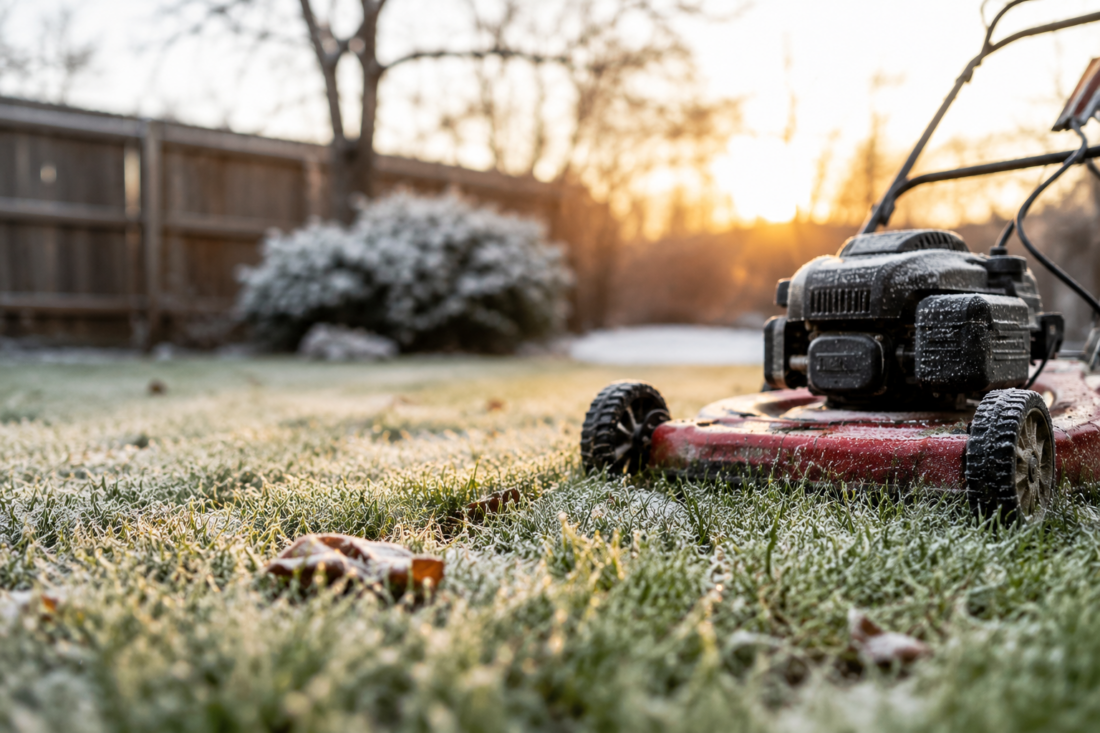
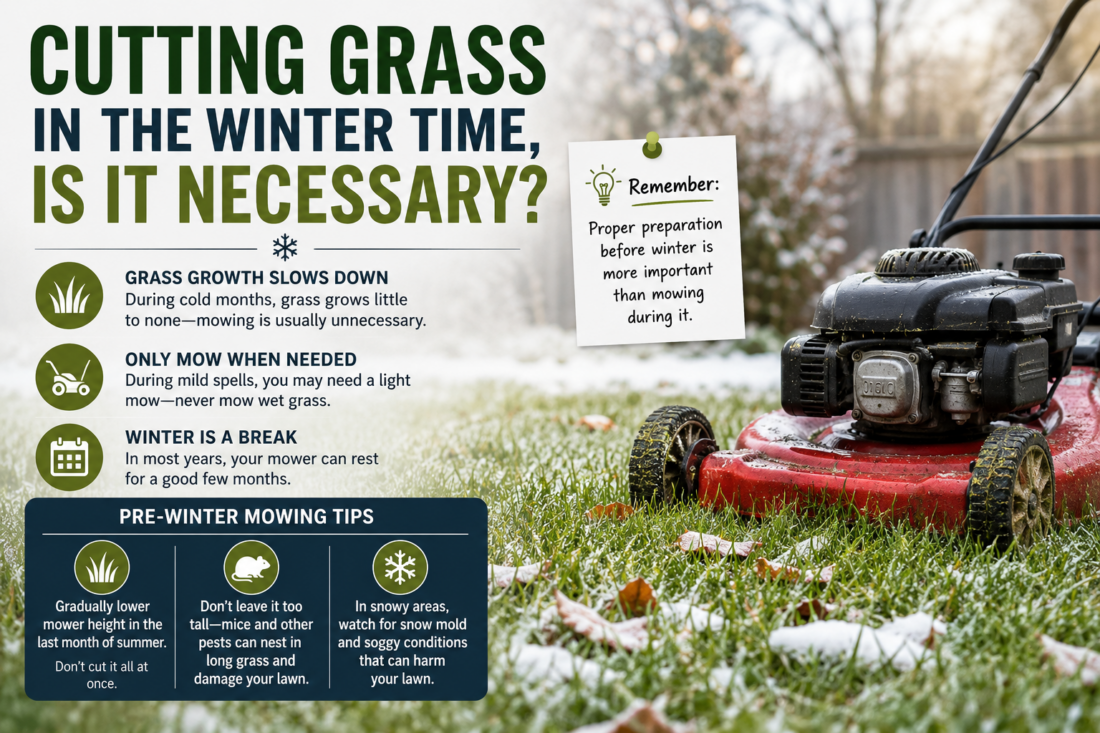
For most homeowners, cutting grass during the winter months is usually not necessary. As temperatures drop, grass growth slows significantly, especially for warm-season grasses like Bermuda, Zoysia, and St. Augustine that commonly go dormant in North Texas. In many cases, lawns stop growing almost entirely until warmer weather returns in spring.
However, there are occasional situations where winter mowing may still be needed. During mild weather or warmer winter periods, some lawns may continue producing limited growth. If your grass becomes uneven or overgrown, a light mow may help maintain the appearance of the lawn. Still, winter mowing should be done carefully to avoid damaging dormant turf.
One of the most important things to remember is to never mow wet grass during winter. Cold, damp turf is much more vulnerable to damage from mower tires, foot traffic, and uneven cutting. Mowing wet grass can tear the blades rather than cleanly cutting them, potentially causing stress and leaving the lawn susceptible to disease and fungal issues.
Why Most Lawns Don’t Need Winter Mowing
During winter dormancy, grass enters a resting phase where growth nearly stops. Since the lawn is no longer actively growing at the same rate as spring and summer, regular mowing schedules are no longer necessary.
For many homeowners, winter becomes a break from:
- Weekly mowing
- Frequent edging
- Heavy lawn maintenance
- Constant grass growth management
In most years, the mower may sit unused for several weeks or even months, depending on weather conditions and grass type. Read this article to learn what dormant grass looks like.
Pre-Winter Mowing Strategies
Preparing your lawn properly before winter is often more important than mowing during winter itself. As the growing season comes to an end, homeowners should gradually lower the mower height slightly over the final few cuts of the season rather than cutting the grass drastically all at once.
Gradually trimming the lawn shorter helps the grass transition into dormancy more effectively without shocking the turf. A slightly shorter lawn heading into winter can also improve airflow and help reduce certain fungal lawn problems.
At the same time, homeowners should avoid cutting the lawn excessively short. Scalping the grass before winter can weaken the turf and expose the crown of the grass plant to cold weather stress.
Problems Caused by Tall Grass During Winter
Allowing grass to remain too tall throughout winter can sometimes create additional lawn problems. Thick, overgrown grass may provide shelter for field mice, voles, and other burrowing pests looking for warmth during colder weather.
These pests can damage the lawn by:
- Tunneling through the turf
- Building nests
- Pulling apart grass for nesting material
- Creating dead or bare patches in spring
Keeping the lawn maintained at an appropriate height before winter can help reduce these risks.
How Much and When to Lower Mowing Height Before Winter
| Time of Year |
Recommended Mowing Height Adjustment |
Why It Helps |
| Early Fall |
Maintain normal mowing height |
Keeps the lawn healthy while growth is still active |
| Mid Fall |
Lower mowing height slightly (about ¼–½ inch) |
Begins preparing the lawn for dormancy gradually |
| Late Fall |
Lower another small increment if needed |
Helps reduce excess growth and improves airflow |
| Final Mow Before Winter |
Cut lawn slightly shorter than summer height, but avoid scalping |
Reduces risk of disease, pests, and matted grass during winter |
| Winter Dormancy |
Usually no mowing needed |
Grass growth slows dramatically or stops entirely |
Winter Lawn Disease Concerns
In colder climates with snow accumulation, homeowners should also be aware of snow mold and other fungal lawn diseases. Snow mold can develop when snow sits on damp or matted grass for long periods of time.
Even in areas without significant snowfall, prolonged moisture and poor drainage during winter can still create conditions for fungal stress and lawn damage. Avoiding excessive lawn moisture and maintaining proper winter lawn height can help reduce the chances of disease issues developing before spring arrives.
Final Thoughts
So, is cutting grass in the wintertime necessary? Usually not. Most lawns grow very slowly or become fully dormant during colder months, meaning regular mowing is often unnecessary. However, occasional light mowing during mild winter weather may still be appropriate if the grass becomes uneven or overgrown.
The most important thing homeowners can do is properly prepare the lawn before winter arrives by gradually lowering mowing height, avoiding overly tall grass, and preventing wet winter lawn conditions that can lead to turf damage and disease.
Let Ryno Lawn Care Handle Winter Lawn Maintenance
Preparing your lawn properly for winter can make a major difference in how healthy and green it looks when spring returns. With Ryno Lawn Care’s full-service lawn maintenance , our team handles everything your lawn needs through every season to keep it looking its best year-round. Homeowners across the DFW area trust Ryno Lawn Care to keep their lawns healthy year after year.
Frequently Asked Questions about Winter Lawn Care
Should you mow your lawn during winter?
In most cases, winter mowing is not necessary because grass growth slows significantly or stops completely during colder weather, especially for warm-season grasses like Bermuda and Zoysia.
Is it bad to mow wet grass in winter?
Yes. Mowing wet winter grass can damage the lawn, create uneven cuts, compact the soil, and increase the risk of fungal lawn diseases.
How short should grass be before winter?
Homeowners should gradually lower the mowing height slightly during the final cuts of the season, but avoid scalping the lawn too short before winter dormancy.
Can tall grass cause problems during winter?
Yes. Overgrown grass can trap excess moisture, increase the risk of lawn disease, and create shelter for mice and other burrowing pests during colder months.
Does Bermuda grass grow during winter in Texas?
Bermuda grass usually becomes dormant during winter in Texas, although mild temperatures may occasionally trigger small amounts of temporary growth.
What happens if you mow dormant grass too often?
Excessive mowing during dormancy can stress the turf, damage fragile grass blades, and weaken the lawn heading into spring growth.
What is snow mold on lawns?
Snow mold is a fungal lawn disease that can develop when snow or prolonged moisture sits on dormant grass for extended periods of time.
When should you stop mowing your lawn for winter?
Most homeowners can stop regular mowing once grass growth slows substantially and the lawn enters dormancy, which usually happens during late fall or early winter.